PROCEDURES COVERED
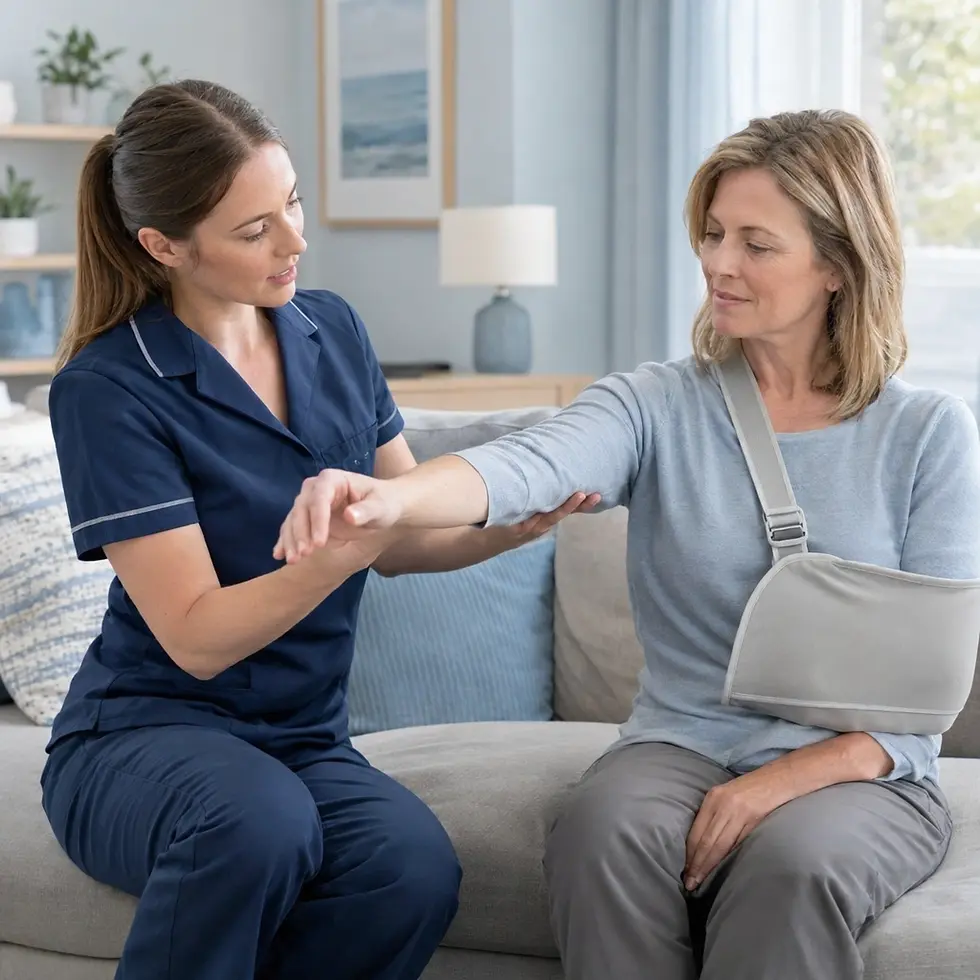
Shoulder surgery we support at home
Every operation, surgeon and patient is different. Your programme follows your surgeon's instructions, sling guidance and movement precautions — no single plan or timeline applies to everyone.
ROTATOR CUFF REPAIR
Protected, carefully graded movement that respects tendon healing, progressing towards strength and everyday reach.
SHOULDER REPLACEMENT
Anatomical or reverse replacement — rehabilitation guided by your implant type, surgical approach and precautions.
STABILISATION & LABRAL REPAIR
Including Bankart and SLAP repairs, focusing on controlled range, dynamic stability and renewed confidence in the arm.
OTHER SHOULDER OPERATIONS
Such as subacromial decompression, fracture fixation, biceps tenodesis and capsular release, each with tailored progression.
RECOVERY CHALLENGES
Pain, protection and the patience a shoulder asks for
After rotator cuff repair, shoulder replacement or stabilisation surgery, everyday tasks can suddenly feel out of reach. Discomfort at night, a sling, and restricted upper-limb movement can make dressing, washing and sleeping unexpectedly difficult.
Stiffness, weakness and a natural fear of moving the arm too soon are common. Repaired tissues need protection, yet carefully guided movement matters too — balancing the two is where skilled, calm support makes a difference.
Every operation, surgeon's instructions, sling period and set of precautions is different. We follow your surgical team's guidance closely — no single exercise plan or timeline applies to everyone.
STAGED REHABILITATION
Progress guided by your recovery, not the calendar
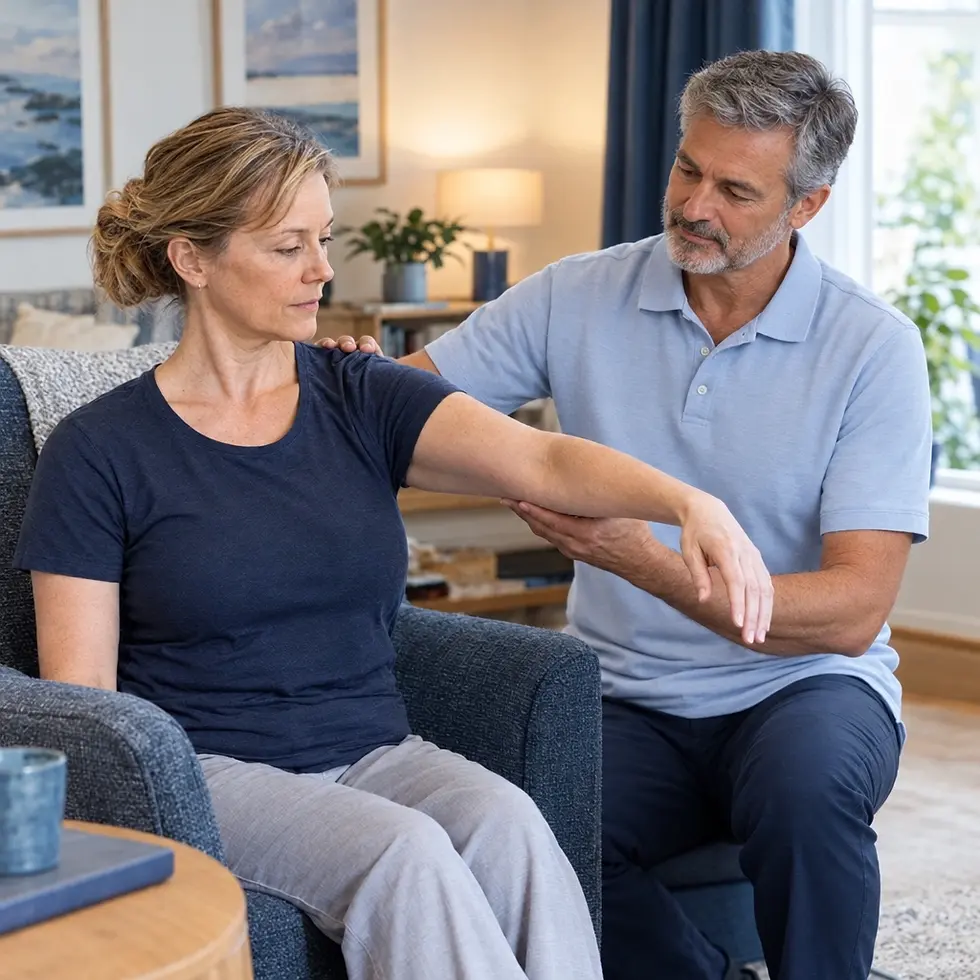
Rehabilitation moves through stages as you meet clinical milestones. Your surgery, your surgeon's instructions, weight-bearing restrictions, precautions and protocol all shape when and how you progress — no single exercise plan or timeline applies to everyone.
STAGE 01
Acute & Protected
- Protect the repair within your surgeon's precautions
- Manage pain and swelling
- Gentle, permitted movement and circulation
- Safe transfers and early mobility at home
STAGE 02
Active Recovery
- Progressive range of movement
- Controlled strengthening and loading
- Improved balance and movement quality
STAGE 03
Functional Return
- Confidence in everyday tasks
- Endurance for walking, stairs and activity
- Return to valued routines, as cleared
SHOULDER REHABILITATION — QUESTIONS
Questions about recovering after shoulder surgery
Every operation, surgeon and shoulder is different. These answers are general guidance only — your surgeon's instructions, sling advice and precautions always take priority, and no single exercise plan or timeline applies to everyone.
How long will I need to wear a sling?
Sling use depends on your procedure, the quality of the repair and your surgeon's protocol. Rotator cuff repairs, stabilisation and replacements are often protected differently. We follow your surgeon's guidance precisely and help you manage dressing, sleeping and daily tasks safely while the sling is in use.
When can physiotherapy start after rotator cuff repair?
Many people begin with gentle, protected movement early on, but the start point and what is permitted are set by your surgeon. Early sessions typically focus on pain management, posture, and movement of the neck, elbow, wrist and hand, progressing to shoulder movement only when cleared.
Is stiffness normal after shoulder surgery?
Some stiffness is common while the shoulder is protected. The aim is to restore range of movement gradually without stressing healing tissue. Your physiotherapist will monitor progress closely and liaise with your surgical team if movement is not progressing as expected.
Does rehabilitation differ after a shoulder replacement?
Yes. Anatomical and reverse shoulder replacements, stabilisation and labral repairs each carry different movement precautions. Your programme is built around your specific operation and the restrictions your surgeon has given, rather than a generic shoulder plan.
When will I be able to drive, work or reach overhead again?
There is no fixed date. Return to driving, work and overhead activity depends on your surgery, healing, strength and control, and your surgeon's clearance. We work towards the tasks that matter to you, progressing step by step at home.