Post-Operative Hip Rehabilitation
Move forward with confidence after hip surgery.
Specialist post-operative physiotherapy at home in London, helping you rebuild strength, restore mobility and return to everyday activities following hip surgery.
For recovery after hip replacement, resurfacing, fracture repair or arthroscopy. Your programme follows your surgeon's instructions and precautions — never a fixed timeline.

We also support recovery after other hip operations. Every operation and recovery is different. Your programme follows your surgical team's protocol, never a fixed timeline.
PROCEDURES COVERED
Rehabilitation after hip surgery
Home-based physiotherapy shaped around your operation and your surgeon's instructions, including any weight-bearing restrictions or hip precautions that apply to you.
Total hip replacement
Including partial replacement. Recovery is guided by your surgeon's precautions and weight-bearing advice.
Hip resurfacing
Progressive strength and mobility work, following the protocol set by your surgical team.
Hip arthroscopy
Where appropriate, rehabilitation respects the specific repair carried out during keyhole surgery.
Hip fracture repair
Rebuilding safe transfers, walking and balance after fracture fixation, with care around fear of falling.
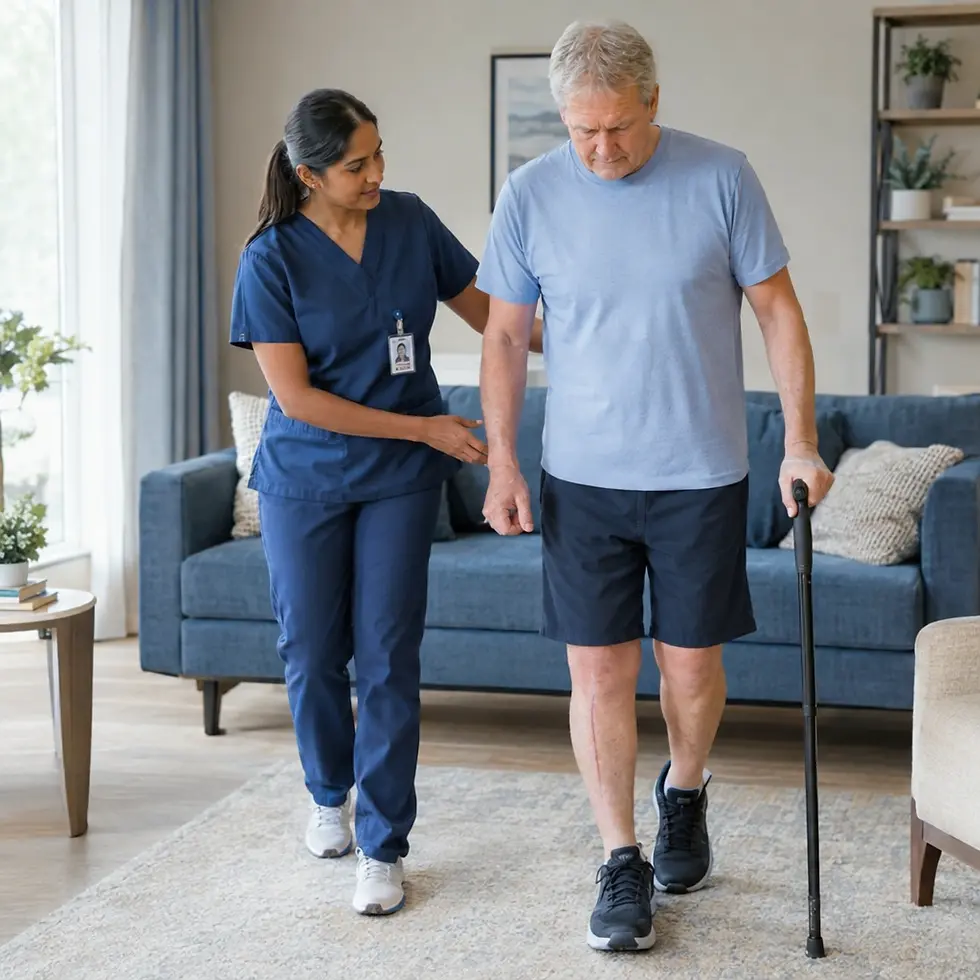
Common recovery challenges
Post-operative hip rehabilitation to restore mobility
After hip surgery, pain, stiffness and weakness can make everyday tasks feel demanding: getting in and out of bed, transfers from a chair or toilet, using walking aids, managing stairs, or dressing and washing.
Many people also feel a natural loss of confidence or a fear of falling. Working within your surgeon's precautions and weight-bearing instructions, we help you move safely and steadily in your own home.
Every surgery, protocol and recovery is different. No single exercise plan or timeline applies to everyone, so your rehabilitation is always guided by your surgical team's instructions and your individual progress.
STAGED REHABILITATION
Milestones, not deadlines
Hip recovery rarely follows a straight line. Each stage is guided by your surgeon's instructions, weight-bearing status and hip precautions — progression depends on you, not the calendar. No single exercise plan or timeline applies to everyone.
STAGE 1
Protect & settle
Safe transfers, walking aid use and gentle circulation work, within your surgeon's precautions and weight-bearing guidance.
STAGE 2
Restore movement
Controlled hip mobility and gluteal activation to rebuild a smoother, more even walking pattern.
STAGE 3
Build strength
Progressive loading, balance and stair practice as tolerance allows — reducing reliance on walking aids when appropriate.
STAGE 4
Return to life
Confident walking outdoors, getting in and out of the car, and the everyday activities that matter most to you.
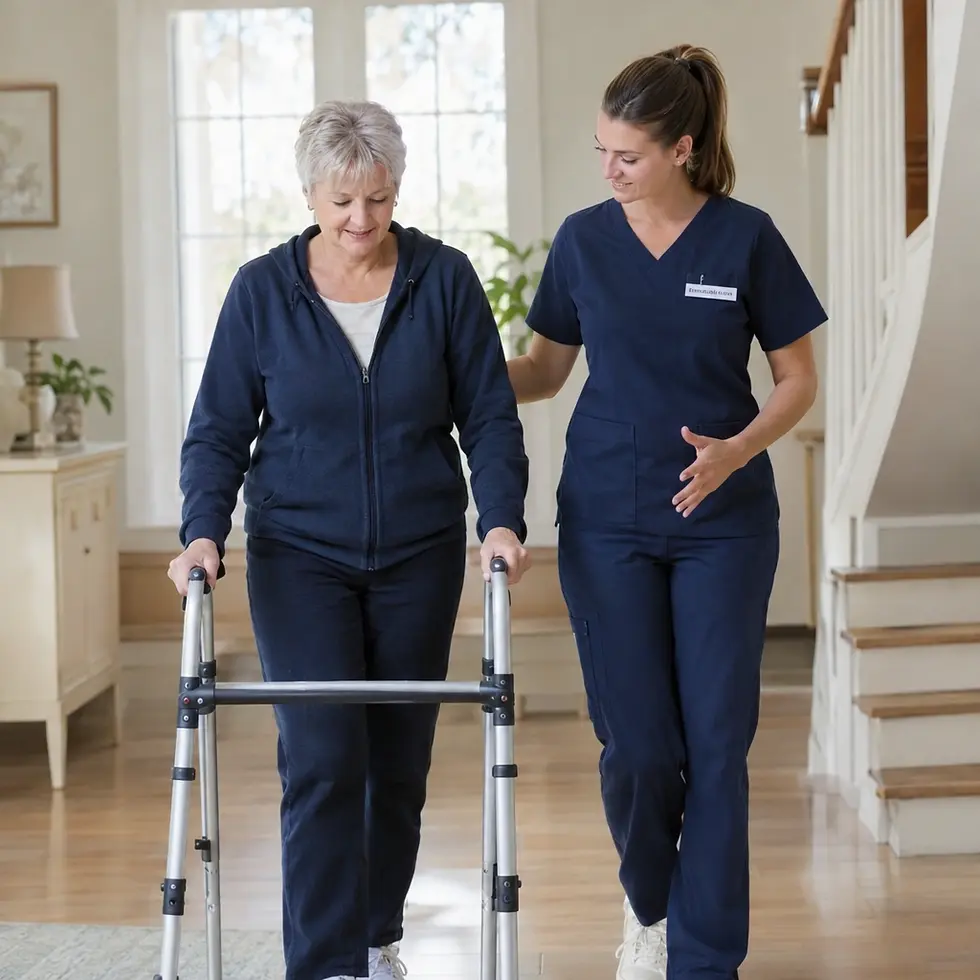
PHYSIOTHERAPY AT HOME
Rebuild walking confidence where it matters most — in your own home.
Sessions are shaped around your stairs, chairs, bed and walking routes, and always follow your surgeon's instructions, weight-bearing guidance and precautions. Every hip recovery is different, so no single exercise plan or timeline applies to everyone.
HIP REHABILITATION — QUESTIONS
Recovering after hip surgery, answered clearly.
Every operation, surgeon and recovery is different. Your physiotherapy always follows your surgical team's instructions, precautions and weight-bearing guidance. If you notice signs of infection, a possible blood clot or any serious new problem, contact your surgical team or seek urgent medical advice.
When should physiotherapy start after hip surgery?
Many people begin soon after leaving hospital, but timing depends on your procedure and your surgeon's guidance. We arrange home sessions once you are discharged and align them with any instructions you have been given.
Will I have hip precautions after a replacement?
Some patients are given movement precautions and others are not — it varies with surgical approach and surgeon preference. We work strictly within whatever precautions apply to you and help you move confidently around them.
When can I stop using my walking aids?
There is no fixed answer. Weight-bearing status, procedure type, strength and balance all play a part. We progress your walking aids only when your surgical guidance allows and your gait is safe and controlled.
Can hip rehabilitation really be done at home?
Yes, for many patients. Working in your own home lets us practise the transfers, walking and everyday tasks you actually face, using your bed, chairs, bathroom and stairs, at a pace that suits you.
How will I manage the stairs at home?
We practise a safe stair technique on your own staircase, with your walking aid and rail, and within your weight-bearing guidance. As strength and balance improve, we progress gradually and only when it is safe to do so.
What happens at the first appointment?
Your first visit is an individual assessment. We review your operation and discharge instructions, then assess pain, movement, transfers, walking, balance and strength before agreeing goals and a plan with you.